
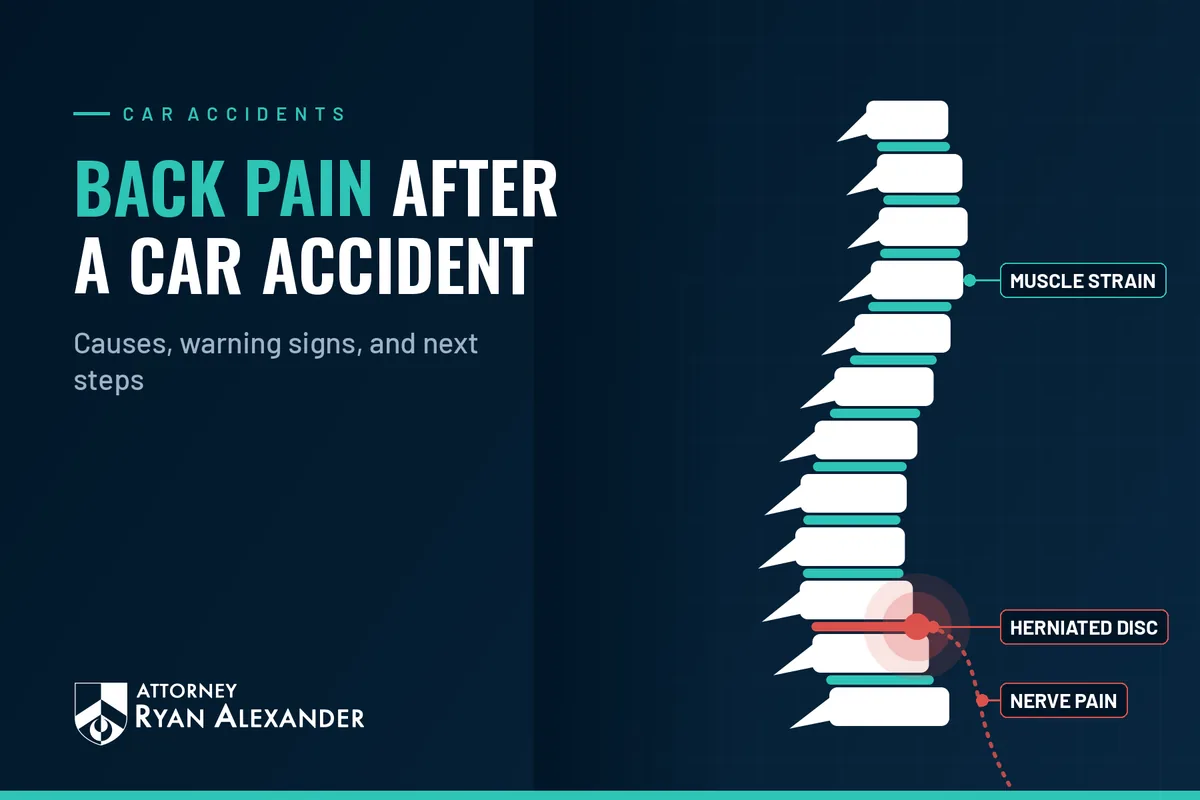
Back Pain After a Car Accident: Causes, Warning Signs, and Next Steps
Back pain is one of the most common complaints after a car accident, and one of the most commonly underestimated, by injured people and by insurance companies alike.
Some back injuries are strains that heal in weeks. Others are disc injuries that change how a person works, sleeps, and moves for years. In the first days after a crash, those two can feel very similar, which is why the early steps matter.
What Causes Back Pain After a Crash?
The forces in a collision load the spine in ways it is not built for. Common results include:
- Muscle and ligament strains and sprains in the lower or mid back, the most frequent cause.
- Herniated or bulging discs, where the cushioning between vertebrae is damaged and can press on nearby nerves.
- Facet joint injuries in the small joints that guide spinal movement.
- Sciatica and nerve pain, radiating pain, numbness, or tingling running into a leg, usually from a disc or swelling pressing on a nerve root.
- Fractures, less common in low-speed crashes but possible, particularly in higher-speed collisions and for people with weaker bones.
Delayed Back Pain Is Common
It is normal for back pain to peak 24 to 72 hours after a crash, not at the scene. Adrenaline masks pain early, and inflammation builds over the first days. Stiffness on day two and real pain on day three is a pattern doctors see constantly.
That delay is also why telling the officer, the other driver, or the insurance adjuster "I'm fine" at the scene causes problems later. You were reporting how you felt in the first ten minutes, not making a medical diagnosis.
Related: Whiplash Symptoms After a Car Accident
Warning Signs That Need Prompt Care
Most post-crash back pain is musculoskeletal. Some presentations are not, and need emergency or same-day evaluation:
- new weakness in a leg or foot
- numbness in the groin or saddle area
- loss of bladder or bowel control, or inability to urinate
- pain that is severe, rapidly worsening, or accompanied by fever
- numbness or tingling that keeps spreading
Loss of bladder or bowel control with back pain can signal cauda equina syndrome, a surgical emergency. Treat it that way.
How Back Injuries Are Diagnosed
Diagnosis starts with an examination: range of motion, reflexes, strength, and exactly where pain travels. X-rays can rule out fractures. An MRI is the study that shows discs and nerves, and is typically ordered when pain persists, radiates into a leg, or the exam points to a disc injury.
If your pain pattern changes, for example back pain that starts running down your leg in week two, report it. That detail changes both the diagnosis and the treatment plan.
Treatment and Recovery
Most back injuries are treated conservatively first: activity modification, medication as directed, physical therapy, and time. Some cases need injections to calm an inflamed nerve root. A smaller share, usually with a herniated disc causing progressive weakness or pain that will not respond to other care, need surgery.
Recovery timelines vary widely, which is one reason settling a claim before the medical picture is clear is risky. A case valued as a six-week strain looks very different if it becomes a disc injury with injections in month three.
Related: How Personal Injury Settlements Work in Nevada, Step by Step
The Pre-Existing Condition Argument
Insurers routinely pull old records, find age-related disc degeneration, which most adults have on imaging whether it hurts or not, and argue the crash caused nothing. Nevada law draws the line differently: a person who aggravates a pre-existing condition can recover for the aggravation, the worsening the crash actually caused. The fight is over before and after, which is why treatment records from before the crash and a clear symptom timeline after it both matter.
Why Documentation Matters for a Back Claim
Back claims are valued on records, not on how much you say it hurts. Consistent treatment, imaging that matches your symptoms, documented work restrictions, and a recovery timeline with no long unexplained gaps are what move an insurer. Gaps in treatment are read as proof you healed, even when the real reason was cost or scheduling.
Back Pain From a Las Vegas Crash?
If your back has hurt since the accident, get it examined and documented, then talk to Attorney Ryan Alexander and his team about what the records support and what to do next.
Free Case Evaluation (702) 333-8888
This article provides general information and does not constitute legal or medical advice. Every accident is different, and different claims may involve different deadlines, insurance policies, and legal issues. Seek medical care promptly for any symptoms after a crash.
back pain after a car accident herniated disc car accident claim delayed back pain after accident sciatica after car accident back injury settlement Nevada lower back pain car crash car accident lawyer Las Vegas